
University Coaching & Academic Mentoring
A coach’s epistolary tradition
By Jade Severson
At the end of every academic year, I’m blown away by how much students have let me into their lives. During my first few years as a UCAM coach, I would talk about the alchemy of coaching meetings, citing consistent presence and attention as potent factors in building strong relationships with students. I struggled to pinpoint the practices that made me effective in my work. As my students started to graduate and reflect on their college years, I heard a consistent refrain: “I kept all the letters you wrote to me and read them when I’m having a hard time.” I realized that the letters that I write to students at the end of each term are crucial elements not only in coaching but in students’ memory, experience, and sense of moving forward.
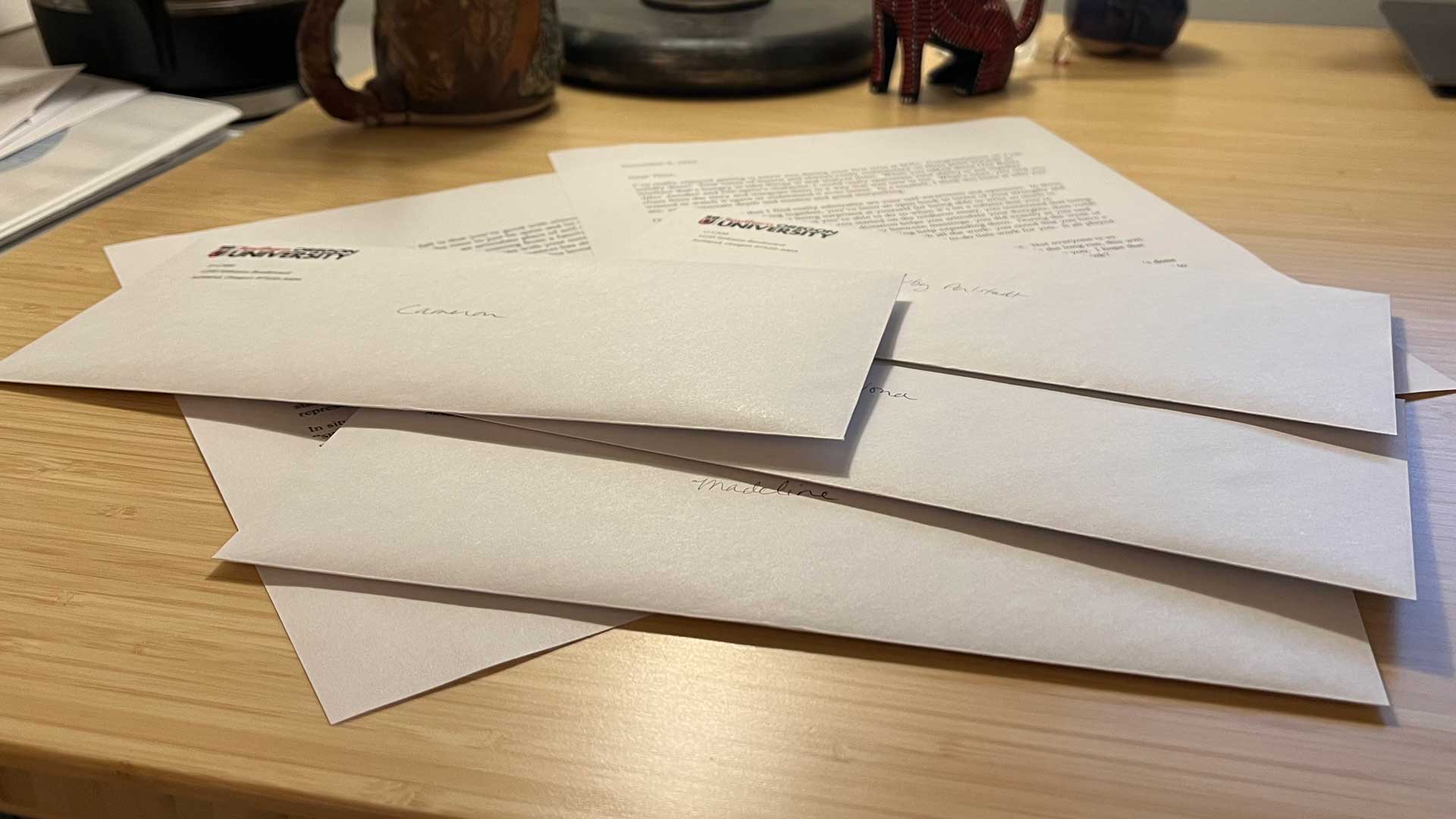
At the end of each term, UCAM coaches provide individualized feedback to their students. It has always felt the most natural for me to write feedback in the form of letters. In these letters, I try to tell a story that gives the months a sense of purpose and plot. They’re in hard-copy form, paper and ink. As so much of life migrates to the digital realm, I’m moved that students keep these letters intact in their dorm rooms and backpacks, taking care that they don’t get creased or lost.
Letters represent a special kind of attention: they are written away from the recipient but while holding them foremost in one’s thoughts. End-of-term letters encompass so much: patterns I’ve noticed, attempts to trace issues upstream to their source, eureka moments, the things that were too hard to say aloud in conversation. More than anything, I hope that letters make students feel seen in the way they hope to be seen. It’s the Goethe mantra: “If you treat an individual as he is, he will remain how he is. But if you treat him as if he were what he ought to be and could be, he will become what he ought to be and could be.”
During the last meeting of every term, I read these letters aloud to students, with their permission. Students have come to expect this, and as with any ritual, a special effervescent atmosphere takes over that aids in personal transformation. Students come into my office, eager and asking for their letters (even the most reticent students). Those are moments that I treasure: the quiet attention, concentration, and vulnerability as they listen to me read. Delivering feedback in a different, slower medium like a letter creates a shift in attention and a different kind of receptivity, energizing coaching with a deep sense of connection and purpose. It’s humbling to me that they take my letters so much to heart, and it’s a reminder of the responsibility we coaches have to guide our students – especially because they take us so seriously.
Learn more about University Coaching and Academic Mentoring at Southern Oregon University:
Ucam Program | Program Services | About Coaches | Cost

